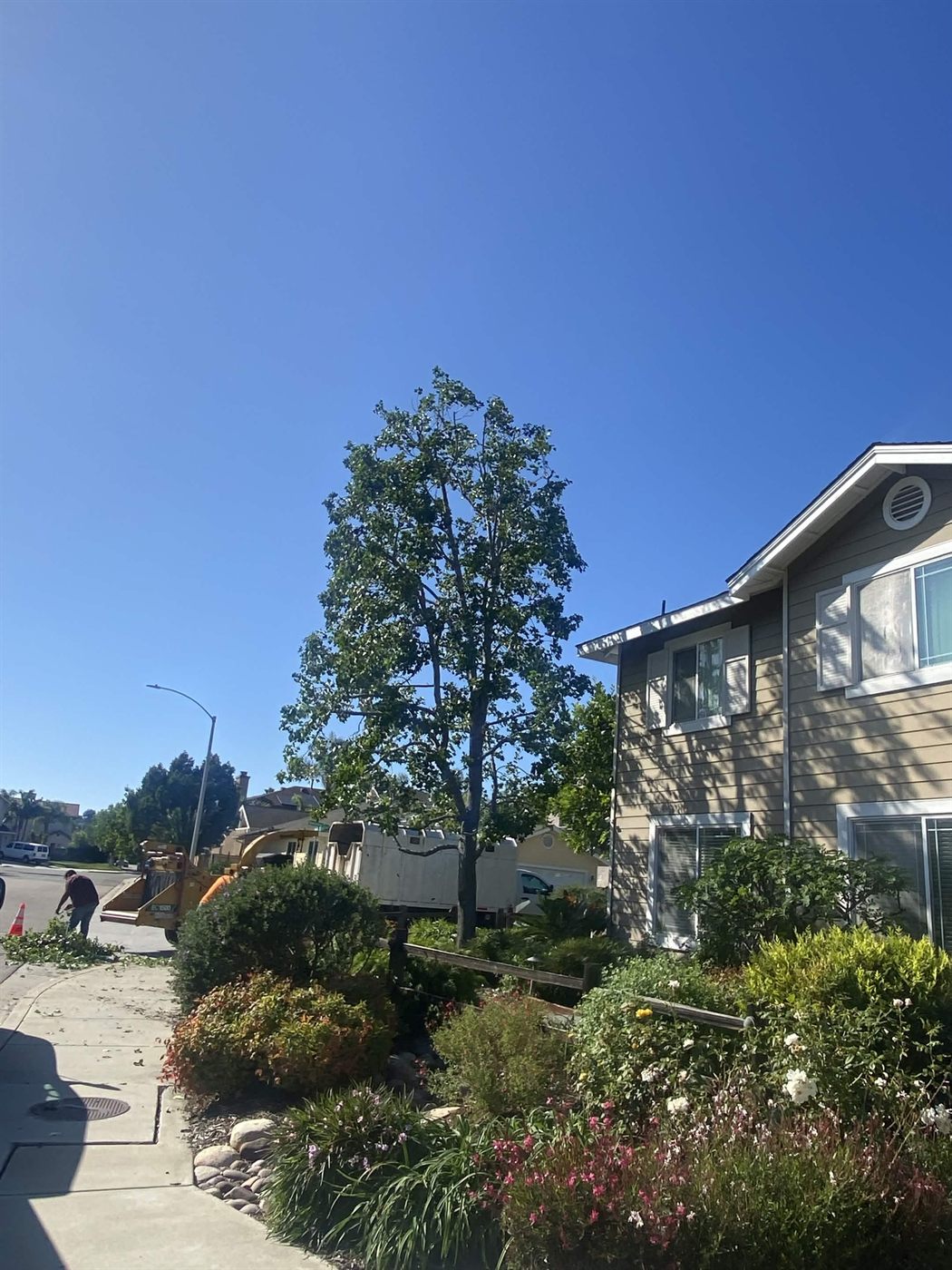
“Daniel and his crew did an amazing job trimming, lacing, and crown reduction on our massive Englemann Oak tree! He also gave us a huge discount on a second tree. I highly recommend Artistic Solutions.”
Tree Trimming & Pruning in San Marcos & North County San Diego.
Oaks, palms, eucalyptus, ornamentals — structural pruning, crown thinning, lacing, deadwood and clearance cuts, and palm trimming. A smart cut, never a topping job. Licensed CSLB #906384. Free on-site estimate — you talk to the crew that does the work.
A smart cut, not a topping job.
Artistic Solutions is a licensed, family-run tree service based in San Marcos, working across North County San Diego — Escondido, Vista, Carlsbad, Oceanside, Poway, Encinitas, Fallbrook, and the inland and coastal neighborhoods between. Tree trimming and pruning is our deepest body of work: coast live and Englemann oaks, Mexican fan and queen palms, big blue-gum eucalyptus, and the ornamentals homeowners want kept safe and shaped — not butchered.
The line we live by is simple: there's a difference between a smart cut and a topping job, and most of the bad tree work you see around the county is the latter. Owner Daniel and our experienced local crew — Pablo, Elias, and the team — prune to keep a tree's natural structure, so it grows back stronger instead of worse. Cleanup and a walk-through are part of the scope we quote: we walk the property with you before we leave, and you sign off in person.
Trimming vs. pruning vs. thinning vs. reduction vs. lacing.
Trimming / pruning
The umbrella term — selective cuts to shape a tree and take out what's dead, crossing, or hazardous. Everything below is a type of pruning.
Crown thinning
Removing interior branches so light and air pass through and the canopy is lighter — the outline stays the same. Good for dense oaks that have gone solid.
Crown reduction
Bringing overall height or spread down with proper cuts back to healthy laterals. The correct way to make a tree smaller when it's crowding a roof or view — not topping.
Lacing
A lighter, selective thinning — common on oaks and ornamentals — that opens the canopy, reduces wind load, and shows off the tree's structure.
If a tree service uses these words loosely, you can end up paying for the wrong work. When we come out, we name exactly which of these your tree needs and why — a straight on-site read: trim it, take it down, or leave it.
Proper pruning vs. topping a tree.
"Topping" is fast and cheap, and it's why so many trees around the county look like hat-racks. Here's what it actually does — and what we do instead:
What topping does to a tree
- Weak regrowth (water sprouts) — the tree panics and throws out a thicket of fast, spindly shoots that are poorly attached and break easily in wind.
- Decay entry — big flat stub cuts can't seal over, so they become open doors for rot, fungus, and pests.
- Sunscald — bark that was shaded for years is suddenly exposed, and in the inland San Marcos/Escondido heat the trunk can scorch and crack.
- Ugly, unstable structure — you lose the natural shape and gain a hat-rack of weak limbs.
- It costs more over time — topped trees need re-cutting sooner, and a failing one eventually becomes a removal.
What proper pruning does instead
- Selective cuts at the right points that respect the tree's natural form
- Removes what's dead, crossing, or hazardous without stripping the canopy bare
- Keeps the tree strong, balanced, and able to seal its own cuts
- Leaves the tree looking like a tree — just cleaner, safer, and better shaped
If someone quotes you a quick "topping" to take a tree down in size, get a second opinion. There's almost always a better cut.
The trimming & pruning work, in plain terms.
- Crown thinning — selectively removing interior branches to let light and air through and lighten the canopy without changing the tree's outline.
- Crown reduction — bringing the overall height or spread down with proper cuts when a tree is crowding a roof, line, or view — the right way to make a tree smaller, not topping.
- Weight reduction — taking load off long, heavy, over-extended limbs so they're far less likely to fail in Santa Ana wind.
- Canopy shaping — restoring a balanced, natural form to a lopsided or neglected tree.
- Deadwood removal — clearing out the dead and dying branches that drop on cars, roofs, and people.
- Clearance & view cuts — pulling limbs back off the roof, gutters, driveway, walkway, or out of a coastal or valley view, with the structure kept intact.
- Palm trimming & skinning — removing browning fronds, seed pods, and old boots, and skinning the trunk on species that take it — measured, never a "hurricane cut" that shaves the crown bare.
- Lacing — a lighter, selective thinning common on mature oaks and ornamentals that opens the canopy and reduces wind load.
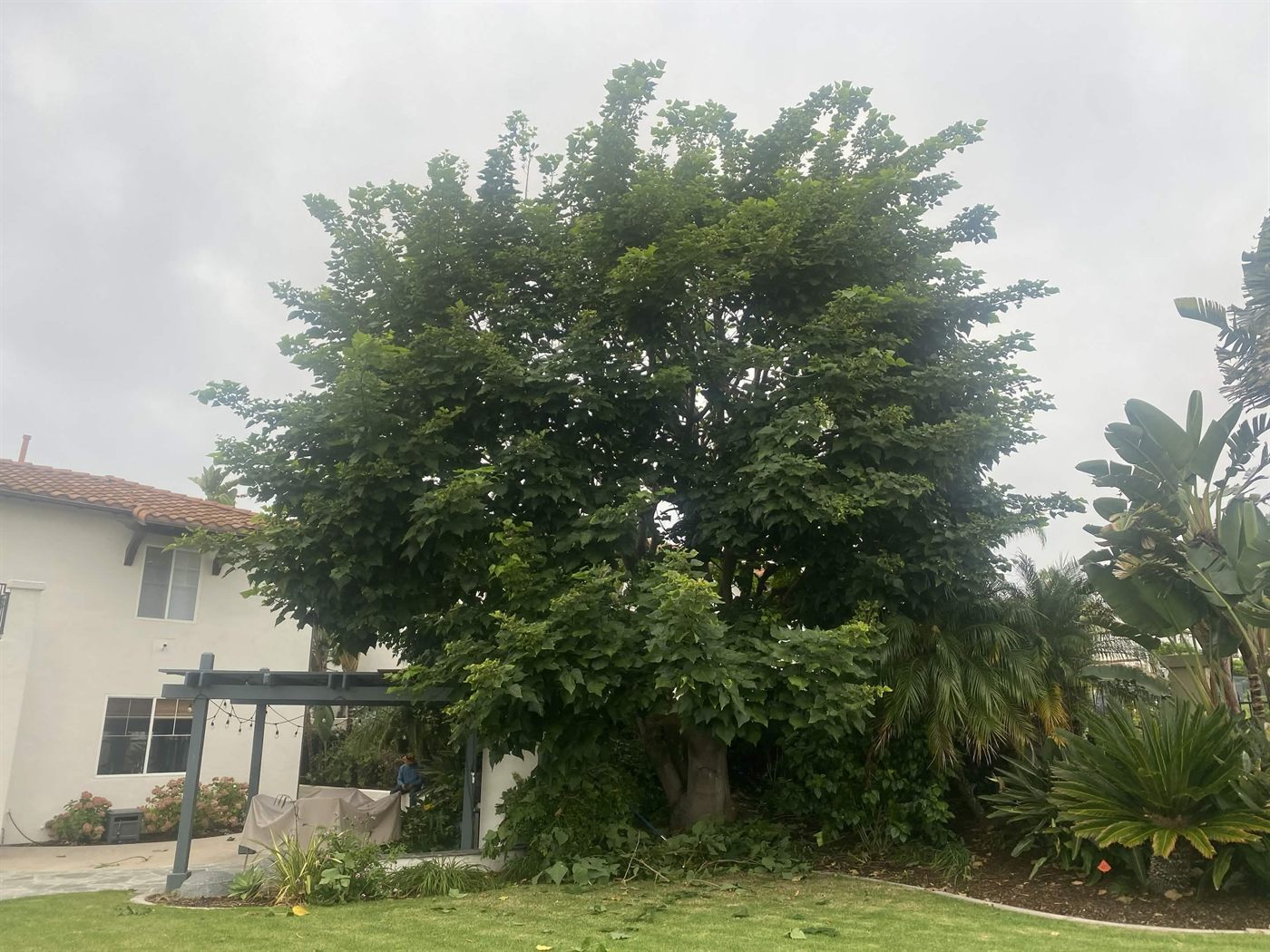
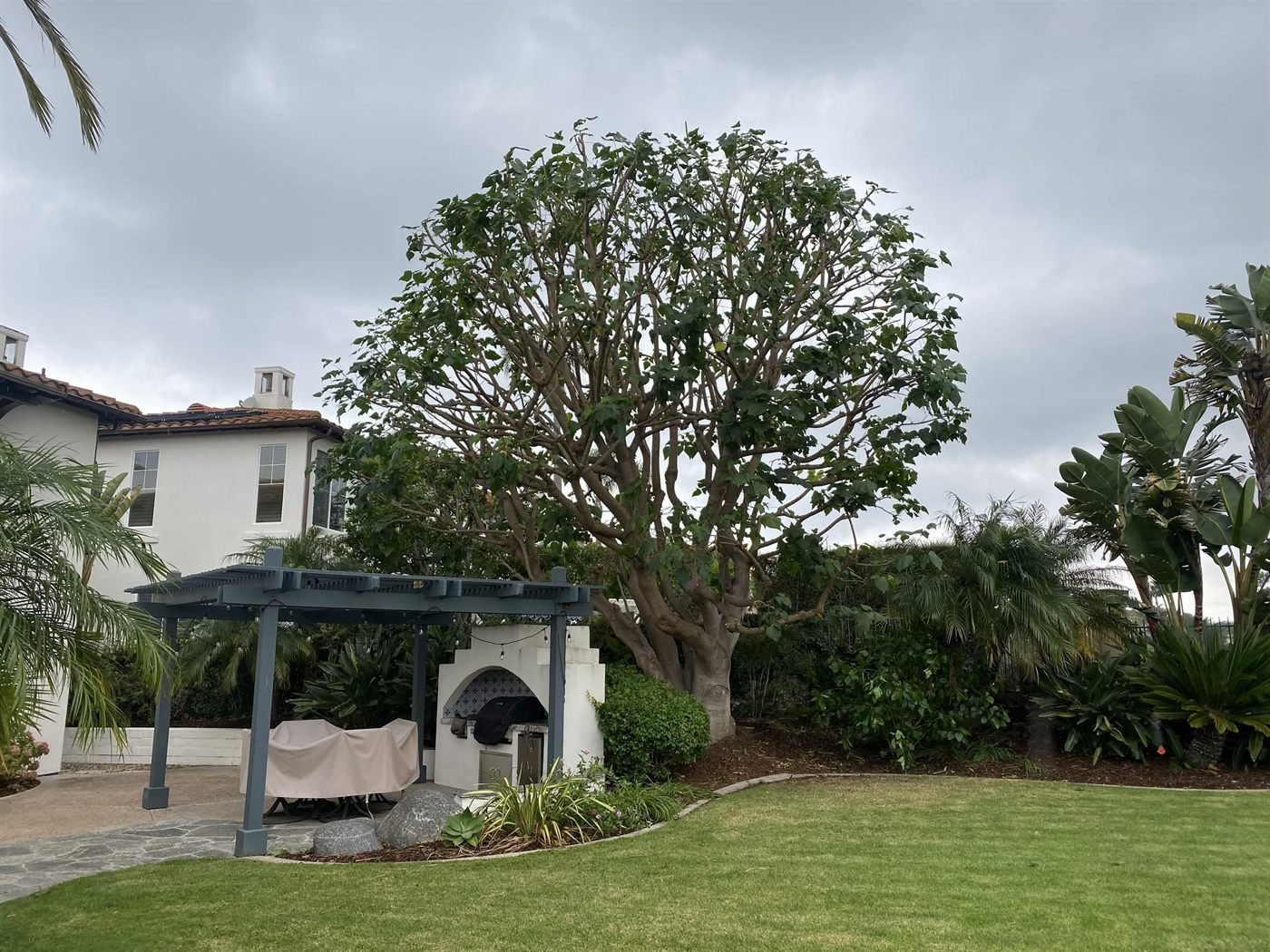
Before and after — actual trees we pruned.
Before
AfterCrown thinning & reduction — canopy lightened and shaped, natural form kept.
Before
AfterLacing & weight reduction — canopy opened and load reduced so a mature tree stays standing.
The trees we prune around here — and what each one needs.
- Oaks (coast live & Englemann) — the signature North County shade tree. They want careful lacing to open the canopy and reduce wind sail, never a hard reduction. Over-trimming an oak stresses it; we take a light, structural hand.
- Palms (Mexican fan, queen, date) — a once-a-year clean-up of browning fronds and seed pods. Coastal palms in Oceanside and Carlsbad take salt spray; inland palms in San Marcos take dry heat. Neither wants the "hurricane cut" that strips the crown.
- Eucalyptus — fast, tall, and notorious for dropping heavy limbs, especially the blue gums on inland slopes. Weight and wind-load reduction before Santa Ana season is the smart move here.
- Pines & ornamentals — deadwood clearing and shaping so a lopsided or neglected tree gets its form back.
- Fire-prone slopes — brushy, over-grown trees on a canyon lot are both a hazard and a wind risk. Trimming ties into defensible-space work.
Two forces shape almost every job in North County: the Santa Ana winds and winter storms that find every weak limb, and the split between coastal salt air and inland heat. We prune with both in mind — reducing wind load before the season, and never over-cutting a tree that's already fighting the heat.
Good reasons to trim a tree.
- Health — clearing deadwood and crossing limbs lets the tree put its energy into sound growth.
- Safety & clearance — pulling branches back off the roof, gutters, driveway, and away from the service line before they cause damage.
- View — opening a canopy or reducing a crown to get a coastal or valley view back without harming the tree.
- Structure — shaping a young or neglected tree now so it grows with good form instead of a problem you pay for later.
- Storm & wind prep — reducing weight and wind load on heavy limbs before Santa Ana winds and winter storms find the weak ones.
Best time of year to prune — and how often.
When should I have my trees trimmed?
Major structural pruning on deciduous trees is best in the cooler, dormant part of the year, and it's worth avoiding heavy cuts on an already-stressed tree during peak inland summer heat. Palms are usually late spring through summer, once the lower fronds brown. The exception that beats the season: reducing weight and wind load on heavy limbs before Santa Ana winds and winter storms arrive. Light cleanup, deadwood, and clearance cuts can happen year-round, and a real safety hazard never has to wait.
How often does a tree need it?
Fast growers and canopy trees near a roof or line often want attention every 1–2 years; slower ornamentals and established oaks can go several years between real prunes; palms are usually a once-a-year clean-up. Trimming on a rigid schedule can over-cut a tree — so we'd rather look at yours and tell you when it actually needs the next cut. We'll give you the honest call on site: trim now, or hold a few weeks for the tree's sake.
Signs your tree is overdue for a trim.
- Branches rubbing or crossing each other and wearing through the bark
- Dead, bare, or brittle limbs hanging in the canopy
- Low branches over the roof, gutters, driveway, or walkway
- A lopsided, top-heavy, or one-sided canopy
- Limbs growing into or near the power line
- Browning, drooping palm fronds and heavy seed pods overhead
- Storm- or wind-cracked branches that haven't failed all the way yet
One of these is usually a routine trim. Several together means the tree is heading toward dropping a limb on its own schedule — better to handle it on a calm day.
From phone call to a clean, shaped tree.
Call us
Call 760-297-4652 with your city and what's bothering you — we're open 24 hours and we'll schedule the free on-site look.
Free on-site estimate
We come look at the tree, the access, and what's around it before we quote. You approve the price before any work starts.
Plan the cuts
We decide what comes off and what stays — thinning, reduction, weight, clearance, lacing, or palm work — to keep the tree's structure intact.
Prune the right way
Proper cuts at the proper points, climbed or reached safely, protecting the roof, fences, lines, and plants below. A smart cut, never a topping job.
Full cleanup & walk-through
Branches chipped, debris hauled or stacked at your call, the area raked. We walk the property with you before we leave so you can sign off in person.
Why we quote on site, not over the phone.
What actually moves the number:
- Size & species — a tall Mexican fan palm, a dense Englemann oak, and a small ornamental are very different days of work
- How much is coming off — a light cleanup vs. a full crown reduction or structural job
- Access — climbed vs. reachable, gated backyard, slope, tight spaces
- What's around it — roof, power lines, fences, pool, neighboring trees
- Cleanup — chipping and haul-away of what comes down
That's why the estimate is free and on site: we'd rather see the tree in person and give you a firm number than guess over the phone. You approve the price before any work starts.
Real trees, real North County jobs.
5.0 stars, 97 reviews — here's the trimming work.
“Elias and his crew did a fantastic job trimming my palms and giant birds of paradise. Elias was prompt in his responses, professional and got the job done quickly and beautifully.”
“Daniel and crew offer amazing service. I'm a repeat customer and their work is consistently professional and beautiful. We've had trees trimmed and removed and always happy with results. Great clean up, they leave the yard so much cleaner than they found it.”
Storm-cracked limb over the house?
A split limb hanging over the roof or driveway doesn't wait for business hours, and neither do we. We're open 24 hours across North County San Diego — San Marcos, Escondido, Vista, Carlsbad, Oceanside, Poway and beyond. Call anytime.
Tree trimming & pruning FAQ.
What's the difference between trimming, pruning, crown thinning, and lacing?
They overlap, but here's the plain version. Trimming and pruning are used interchangeably for making selective cuts to shape a tree and remove what's dead, crossing, or hazardous. Crown thinning removes interior branches so light and air pass through, without changing the tree's outline. Crown reduction brings the overall height or spread down with proper cuts — the correct way to make a tree smaller, not topping. Lacing is a lighter, selective thinning common on oaks and ornamentals that opens the canopy and reduces wind load. On site we'll tell you which of these your tree actually needs.
What's the difference between trimming and topping a tree?
Topping means cutting branches back to stubs with no regard for structure. It's fast and cheap, but it's the wrong move: the tree responds with a burst of weak, fast-growing water sprouts, the open stubs invite decay and pests, the suddenly bare bark can sunscald, and the tree ends up uglier and more hazardous than before — so you pay again sooner. Proper pruning makes selective cuts at the right points to keep the tree's natural shape, strength, and health. That's the smart cut we make instead of a topping job.
When is the best time of year to trim trees in North County San Diego?
Major structural pruning on deciduous trees is best in the cooler, dormant part of the year, and it's wise to avoid heavy cuts on an already-stressed tree during peak inland summer heat in San Marcos and Escondido. Palms are usually done late spring through summer once the old fronds have browned. The one exception is timing that beats the season: reducing weight and wind load on heavy limbs before Santa Ana winds and winter storms arrive. Light cleanup, deadwood, and clearance cuts can be done year-round, and a real safety hazard never waits. We'll give you the honest call on site.
How often should trees be trimmed?
It depends on the species and the tree's job on your property. Fast growers and canopy trees near a roof or line often want attention every 1–2 years; slower ornamentals and established oaks can go several years between real prunes. Palms are usually a once-a-year clean-up as the lower fronds brown. The honest answer is that over-trimming on a schedule is as harmful as neglect — we'd rather look at the tree and tell you when it actually needs the next cut.
How does palm trimming and skinning work — and can you over-trim a palm?
Palm trimming removes the dead and browning lower fronds, seed pods, and old boots; on some species we can skin the trunk for a clean look. The mistake to avoid is "hurricane cutting" — stripping a palm down to a few upright fronds. It stresses the palm, invites pests, and can weaken it. We take the dead and drooping fronds and leave the healthy green crown the palm needs. Coastal palms in Oceanside and Carlsbad and inland palms in San Marcos both do best with a measured trim, not a shave.
How much clearance can you cut from my roof or the power line?
We routinely pull limbs back off the roof, gutters, driveway, and walkway with the tree's structure kept intact. For branches touching or near the service drop from the pole to your house we can help. But the primary high-voltage lines belong to the utility (SDG&E) — by law those are their crews, not ours. If your tree is into the primary lines we'll tell you and point you to the right call rather than take an unsafe cut.
How do I get a quote?
Call 760-297-4652 with your city and what's bothering you, or send the contact form. We're open 24 hours — call and we'll get you on the schedule fast. For anything real we come look in person before quoting, because size, access, and what's around the tree all move the number.
Are you licensed? Do you clean up after the trim?
Artistic Solutions holds California contractor license CSLB #906384 — that's on every job. Cleanup and haul-away are part of the scope we quote up front: branches chipped, the area raked. The crew walks the property with you before we leave so you can sign off in person.
Other services across North County.
If a trim isn't quite the right fix, we also handle tree removal in San Marcos & North County for trees that genuinely need to come down, stump removal & grinding to clear what's left behind, and fire clearance & defensible space work on brushy, fire-prone slopes. Want to see the crew's track record first? Read our 5.0-star reviews, or start at our home page. Not sure which you need? Just call — we'll tell you straight.
Free on-site estimate. Fast response.
No pressure.
Call or send the form. We're open 24 hours — call and we'll get you on the schedule fast.